From broadcast channel to community platform — a 15× lift in squad activity in 8 weeks
From broadcast channel to community platform — a 15× lift in squad activity in 8 weeks
How reframing Playo's dying "Groups" feature into "Squads" — with three small structural changes — turned silent member lists into active sports communities.
How reframing Playo's dying "Groups" feature into "Squads" — with three small structural changes — turned silent member lists into active sports communities.
The Impact
Headline outcomes within 8 weeks of launch, tracked from app analytics
Activities Tagged
Activities Tagged
Weekly Joinees
Weekly Joinees
Squad Creation
Squad Creation
→
Activities / month
Activities / month
My Role
My Role
Led the redesign end-to-end as Sr. Product Designer. I owned funnel analysis synthesis, all design exploration and final UI, and stakeholder alignment with engineering and ops. Cancellation metrics were tracked in collaboration with the data analytics team post-launch
Led the redesign end-to-end as Sr. Product Designer. I owned funnel analysis synthesis, all design exploration and final UI, and stakeholder alignment with engineering and ops. Cancellation metrics were tracked in collaboration with the data analytics team post-launch
Team
1 Product Head
1 Product Head
2 Designers
2 Designers
4 Mobile Devs
4 Mobile Devs
4 Backend Devs
4 Backend Devs
4 QAs
4 QAs
Timeline
8 Weeks
8 Weeks
Platform
Android & IOS
Android & IOS
THE SILENT ROOM
A thousand people in a room. Nobody talking.
A thousand people in a room. Nobody talking.
That was Playo Groups. We had built what seemed like a straightforward feature — players create groups, invite others, post games. Simple. Logical. Dead.
That was Playo Groups. We had built what seemed like a straightforward feature — players create groups, invite others, post games. Simple. Logical. Dead.
Group creation was slowing. Activity tagging was plummeting. But here's what puzzled us most — people weren't leaving. They stayed in these silent groups, present in the member count, absent in every other way. Waiting for something. That question became our north star: what were they waiting for?
Group creation was slowing. Activity tagging was plummeting. But here's what puzzled us most — people weren't leaving. They stayed in these silent groups, present in the member count, absent in every other way. Waiting for something. That question became our north star: what were they waiting for?
By the numbers (pre-redesign baseline)
By the numbers (pre-redesign baseline)
Three signals from app analytics told us this wasn't a polish problem — it was structural:
Three signals from app analytics told us this wasn't a polish problem — it was structural:
Activities tagged to groups: just 98 per month across the platform
Activities tagged to groups: just 98 per month across the platform
Squad creation: 76 per month and trending down
Squad creation: 76 per month and trending down
Weekly group joinees: 1,810 (small fraction of overall app DAU)
Weekly group joinees: 1,810 (small fraction of overall app DAU)
Active participation rate: typically 10–12 players responding per game post, against group sizes of 1,000+
Active participation rate: typically 10–12 players responding per game post, against group sizes of 1,000+
THE PROBLEM
Understanding the Problem Deeply
Understanding the Problem Deeply
What was happening on the surface
What was happening on the surface
Groups were meant to be simple. People go out to play with a set of players. To keep it a habit, they create a group and invite players. Then they post games in the group chat. That was the theory.
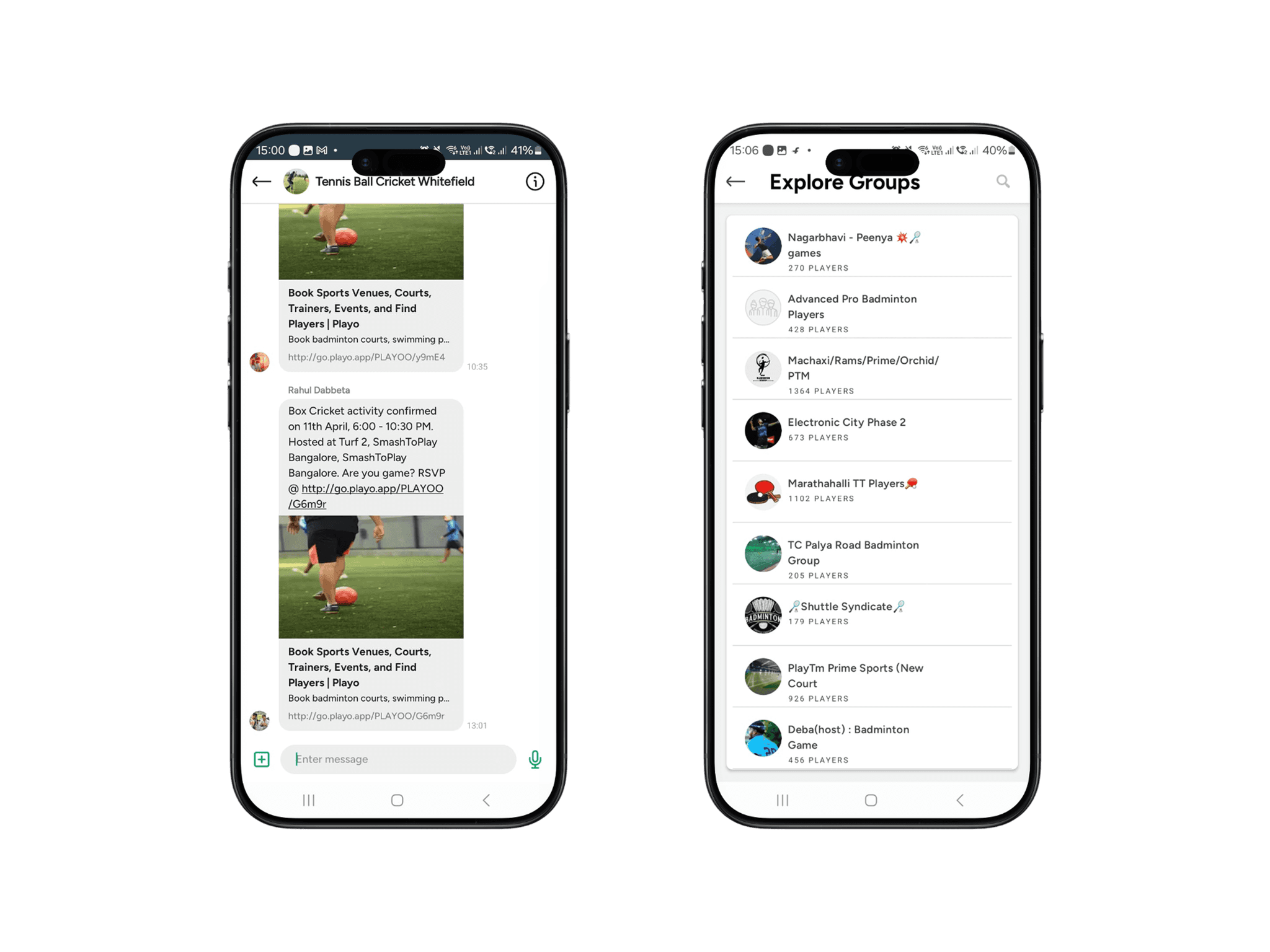
In practice, people were treating group chats like spam folders. The feed was overloaded with activity posts, random messages, and notifications that had nothing to do with their current life. Members who joined when they lived in one area, then moved across the city, were still receiving notifications for games 20 kilometers away. The signal got buried in noise.
Groups were meant to be simple. People go out to play with a set of players. To keep it a habit, they create a group and invite players. Then they post games in the group chat. That was the theory.
In practice, people were treating group chats like spam folders. The feed was overloaded with activity posts, random messages, and notifications that had nothing to do with their current life. Members who joined when they lived in one area, then moved across the city, were still receiving notifications for games 20 kilometers away. The signal got buried in noise.
What was happening beneath the surface
What was happening beneath the surface
Groups had hundreds, sometimes thousands of members. But when an admin posted a game, only 10 to 12 people would join. The rest were ghosts — present in name, absent in action.
Groups had hundreds, sometimes thousands of members. But when an admin posted a game, only 10 to 12 people would join. The rest were ghosts — present in name, absent in action.
The good news was that people valued the concept. They stayed in groups even when they weren't engaging. They didn't leave. They didn't delete. They just went silent, waiting for something better.
The good news was that people valued the concept. They stayed in groups even when they weren't engaging. They didn't leave. They didn't delete. They just went silent, waiting for something better.
The bad news was that this silence was killing the feature slowly. Admins were losing hope. They'd post a game, see minimal response, and gradually stop trying. Group creation declined. Activity tagging dropped. The feature that was supposed to build community was becoming a graveyard of good intentions.
The bad news was that this silence was killing the feature slowly. Admins were losing hope. They'd post a game, see minimal response, and gradually stop trying. Group creation declined. Activity tagging dropped. The feature that was supposed to build community was becoming a graveyard of good intentions.
The deeper problem
The deeper problem
When we dug into the research, we realized the problem wasn't that people didn't want groups. The problem was that groups weren't designed to be communities — they were designed to be broadcast channels.
When we dug into the research, we realized the problem wasn't that people didn't want groups. The problem was that groups weren't designed to be communities — they were designed to be broadcast channels.
Admins used groups to push information out. Members received that information passively, if they noticed it at all. There was no sense of belonging, no shared identity, no reason to engage beyond transactional game joining.
Admins used groups to push information out. Members received that information passively, if they noticed it at all. There was no sense of belonging, no shared identity, no reason to engage beyond transactional game joining.
The mental model was broken. People wanted a tribe. We gave them a mailing list.
The mental model was broken. People wanted a tribe. We gave them a mailing list.
RESEARCH
Empathy Mapping: Two Worlds, One Broken Experience
Empathy Mapping: Two Worlds, One Broken Experience
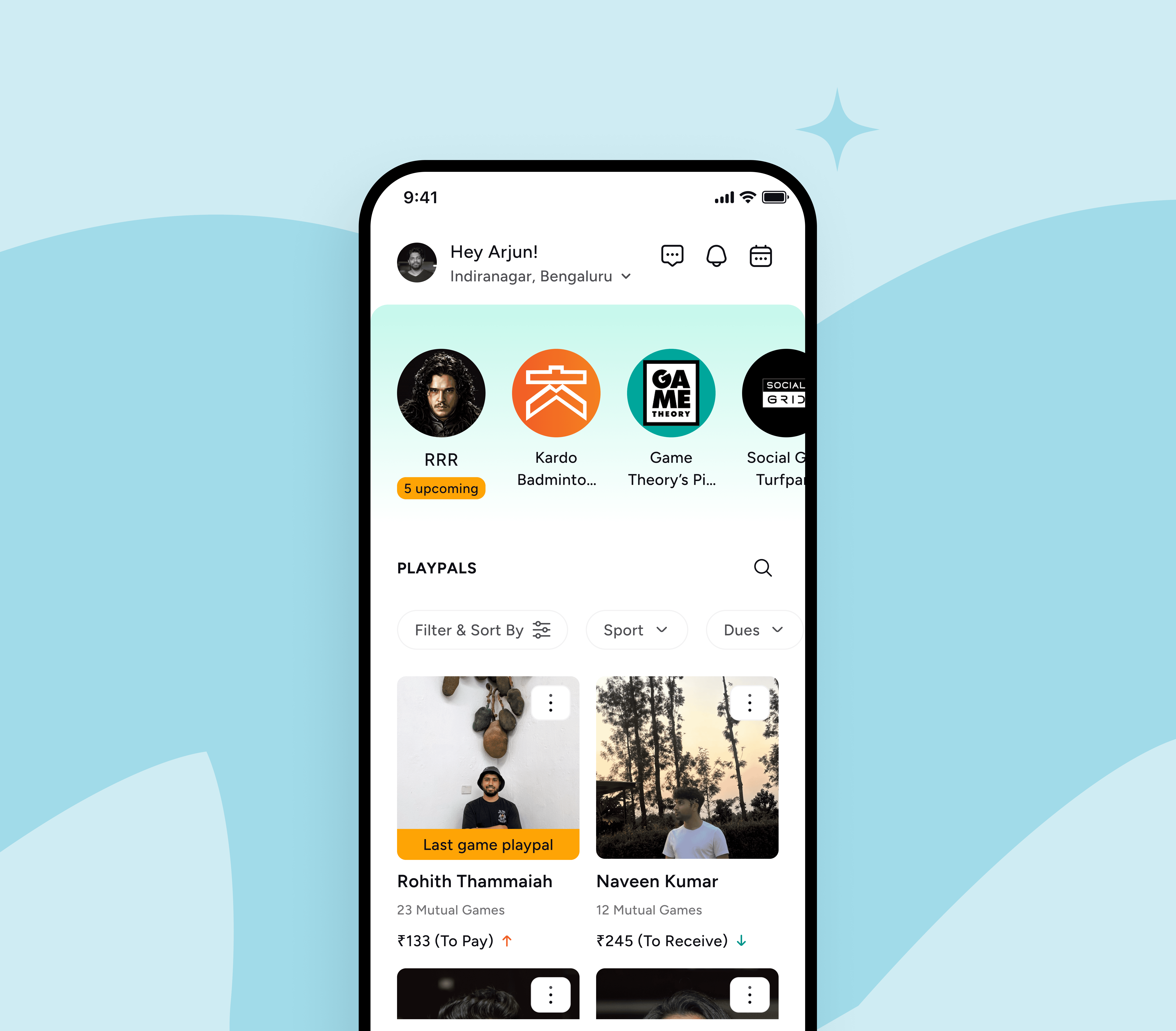
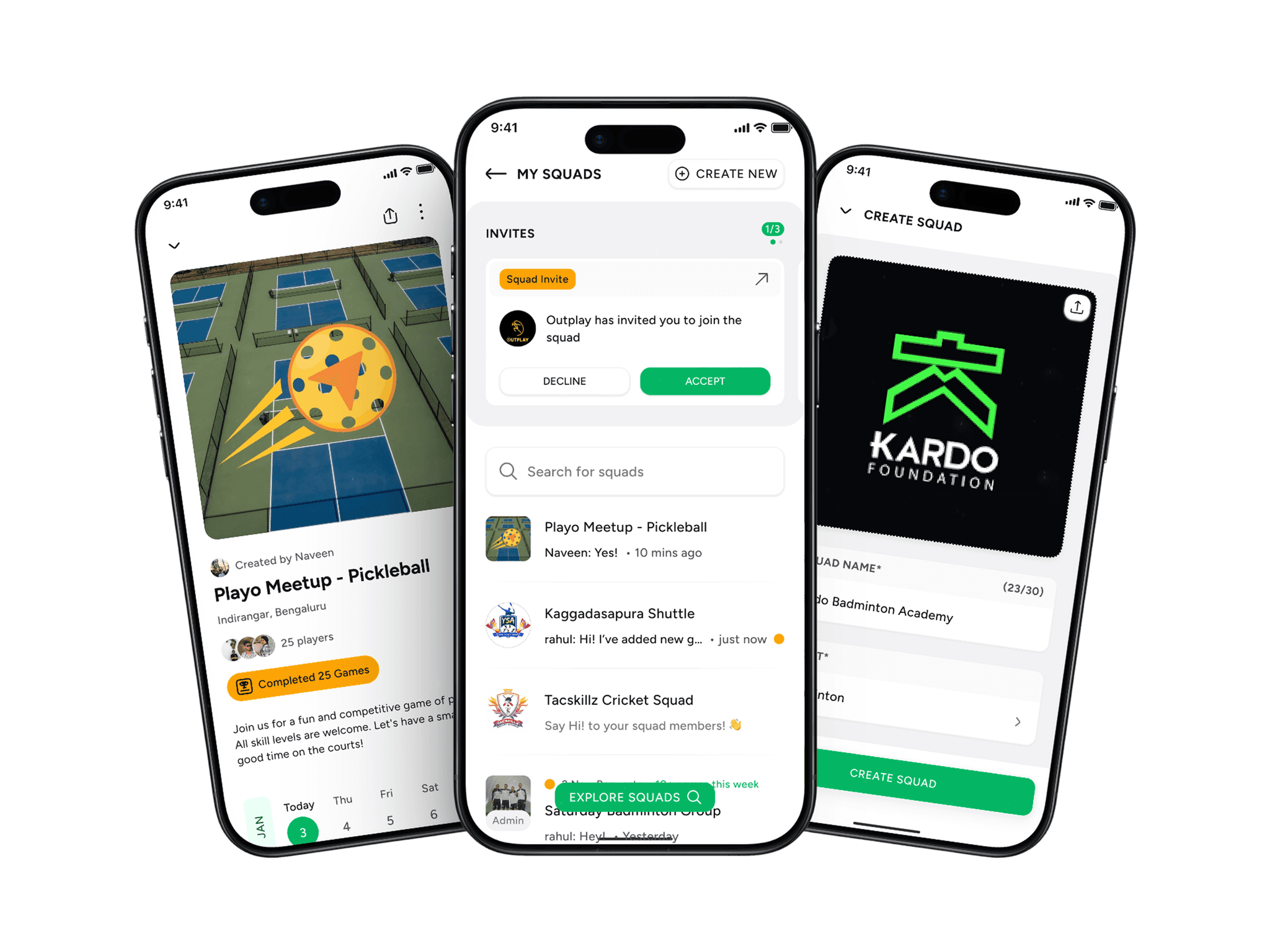
We ran contextual inquiry sessions with two user segments — group admins who created these communities, and members who joined them. We spoke to admins running active groups (including one at Kardo Badminton Academy) and members across multiple sports and locations, observing them use the app in their natural context: at courts, between games, while scrolling notifications.
We ran contextual inquiry sessions with two user segments — group admins who created these communities, and members who joined them. We spoke to admins running active groups (including one at Kardo Badminton Academy) and members across multiple sports and locations, observing them use the app in their natural context: at courts, between games, while scrolling notifications.
We mapped what both segments said, felt, did, and needed — to surface the tension driving disengagement.
We mapped what both segments said, felt, did, and needed — to surface the tension driving disengagement.
THE ADMIN (CREATOR)
Says
Says
Says
"This group is my last hope. When I can't fill my own game, I post here."
"This group is my last hope. When I can't fill my own game, I post here."
Feels
Feels
Feels
Frustrated, isolated, powerless. Posting into a void with no feedback.
Frustrated, isolated, powerless. Posting into a void with no feedback.
Does
Does
Does
Posts games blindly. Stops tagging activities to the group when no one responds.
Posts games blindly. Stops tagging activities to the group when no one responds.
Needs
Needs
Needs
An active community that engages back. A reason to keep investing in the group.
An active community that engages back. A reason to keep investing in the group.
THE JOINEE (MEMBER)
Says
Says
Says
"It feels like spam now. I've muted everything."
"It feels like spam now. I've muted everything."
Feels
Feels
Feels
Overwhelmed, lost. Disconnected from a group that no longer reflects their life.
Overwhelmed, lost. Disconnected from a group that no longer reflects their life.
Does
Does
Does
Mutes notifications. Ignores messages. Stays in the group but doesn't engage.
Mutes notifications. Ignores messages. Stays in the group but doesn't engage.
Needs
Needs
Needs
Relevant games only. A way to see if a group is worth joining before joining.
Relevant games only. A way to see if a group is worth joining before joining.
The admin's reality
The admin's reality
"This group is my last hope. When I can't fill my own game, I post here. Out of a thousand members, maybe twelve respond. I keep posting because what else can I do?"
"This group is my last hope. When I can't fill my own game, I post here. Out of a thousand members, maybe twelve respond. I keep posting because what else can I do?"
Admins saw groups as backup broadcast channels. They weren't building community — they were shouting into voids, hoping someone would hear.
Admins saw groups as backup broadcast channels. They weren't building community — they were shouting into voids, hoping someone would hear.
The member's reality
The member's reality
"I joined when I lived in Koramangala. I moved to Whitefield six months ago. I still get notifications for games 20 kilometers away. It feels like spam now. I've muted everything."
"I joined when I lived in Koramangala. I moved to Whitefield six months ago. I still get notifications for games 20 kilometers away. It feels like spam now. I've muted everything."
Our design assumed users were static. Real humans move, change schedules, evolve preferences. The system hadn't adapted — a clear task-environment fit failure.
Our design assumed users were static. Real humans move, change schedules, evolve preferences. The system hadn't adapted — a clear task-environment fit failure.
The hidden insight
The hidden insight
Both wanted community. Neither had the tools to build it.
Both wanted community. Neither had the tools to build it.
DIAGNOSIS
Diagnosing the Interaction Failure
Diagnosing the Interaction Failure
We mapped the existing flow against established cognitive principles, and the diagnosis was clear: the interface was forcing users to do mental work that no interface should ask for.
We mapped the existing flow against established cognitive principles, and the diagnosis was clear: the interface was forcing users to do mental work that no interface should ask for.
🧠 Chat-as-discovery
🧠 Chat-as-discovery
🧠 Chat-as-discovery
50+
messages per visit to parse
10–12
active per 1,000 members
Recall
demanded over recognition
0
structured game view
Recall
demanded over recognition
0
structured game view
OBSERVED ISSUES
Group chats expected users to hold dozens of information chunks in working memory — game times, locations, slot counts, message context — all at once.
Group chats expected users to hold dozens of information chunks in working memory — game times, locations, slot counts, message context — all at once.
Every game post looked the same as every chat message. No visual hierarchy, no proximity grouping, no figure-ground distinction.
Every game post looked the same as every chat message. No visual hierarchy, no proximity grouping, no figure-ground distinction.
IMPACT
Users couldn't glance and decide — they had to read, parse, remember, and compare. The cognitive tax crushed engagement before it could begin (Miller's Law violation).
Users couldn't glance and decide — they had to read, parse, remember, and compare. The cognitive tax crushed engagement before it could begin (Miller's Law violation).
📍 Static location, dynamic users
📍 Static location, dynamic users
20km+
common notification distance
common notification distance
Static
location at join time
location at join time
Muted
by most repeat users
by most repeat users
No
way to update relevance
way to update relevance
OBSERVED ISSUES
Group membership was anchored to wherever the user was when they joined. The system never re-asked or recalibrated.
Group membership was anchored to wherever the user was when they joined. The system never re-asked or recalibrated.
Members who relocated within the city kept getting notifications for games in areas they no longer lived.
Members who relocated within the city kept getting notifications for games in areas they no longer lived.
IMPACT
The system treated users as static when they were dynamic — a task-environment fit failure that made notifications feel like spam even when content was technically relevant.
The system treated users as static when they were dynamic — a task-environment fit failure that made notifications feel like spam even when content was technically relevant.
👁️ No glanceable identity
👁️ No glanceable identity
Random
or absent group DPs
or absent group DPs
0
preview before joining
preview before joining
Blind
join decisions
Low
perceived squad value
Blind
join decisions
Low
perceived squad value
OBSERVED ISSUES
Group display photos were random uploads — sunsets, logos, sometimes nothing — giving no signal about the group's identity, activity level, or sport focus.
Group display photos were random uploads — sunsets, logos, sometimes nothing — giving no signal about the group's identity, activity level, or sport focus.
Members had no way to assess a group's vibe, activity cadence, or fit before committing to join it.
Members had no way to assess a group's vibe, activity cadence, or fit before committing to join it.
IMPACT
Users made millisecond judgments about value (thin-slicing). A generic or absent image signaled 'this group doesn't care about itself,' priming low engagement before the first game even appeared.
Users made millisecond judgments about value (thin-slicing). A generic or absent image signaled 'this group doesn't care about itself,' priming low engagement before the first game even appeared.
REFRAMING
Reframing the problem
Reframing the problem
Before designing solutions, we ran a jobs-to-be-done analysis to find the actual job users were hiring this feature for.
Before designing solutions, we ran a jobs-to-be-done analysis to find the actual job users were hiring this feature for.
The surface job was 'post games' or 'join games.' But the deeper job was something more human:
The surface job was 'post games' or 'join games.' But the deeper job was something more human:
Help me find my tribe. People who play when I play, where I play, at my level. Make me feel like I belong."
Help me find my tribe. People who play when I play, where I play, at my level. Make me feel like I belong."
This reframe changed the entire problem space. We weren't redesigning a feature. We were architecting belonging.
This reframe changed the entire problem space. We weren't redesigning a feature. We were architecting belonging.
Core Insights
Core Insights
From the research synthesis, four insights emerged — each traceable to a specific behavior or quote from the field, and each shaping a different intervention.
From the research synthesis, four insights emerged — each traceable to a specific behavior or quote from the field, and each shaping a different intervention.
01
LINGUISTIC
Language was shaping the wrong mental model.
"Group" carries bureaucratic affordances — mailing lists, committees, things you're added to. Every behavior in the feature followed from that frame: broadcast in, ignore out. The label was telling users what the feature was for, and that frame was passive by design.
01
LINGUISTIC
Language was shaping the wrong mental model.
"Group" carries bureaucratic affordances — mailing lists, committees, things you're added to. Every behavior in the feature followed from that frame: broadcast in, ignore out. The label was telling users what the feature was for, and that frame was passive by design.
03
SYSTEM
Friction at the bottom of the funnel compounds the most.
Drop-offs after a user has already shown high intent (cart added, checkout viewed) are the most expensive kind. The cost isn't just the lost booking — it's the user, the venue host, and the ops team all touching the same friction at different stages.
03
SYSTEM
Friction at the bottom of the funnel compounds the most.
Drop-offs after a user has already shown high intent (cart added, checkout viewed) are the most expensive kind. The cost isn't just the lost booking — it's the user, the venue host, and the ops team all touching the same friction at different stages.
04
BUSINESS
Loyalty points were paying for behaviour we never got.
Karma Points were issued but rarely redeemed. We were funding a retention mechanic that wasn't visible enough to drive the retention it was designed for.
04
BUSINESS
Loyalty points were paying for behaviour we never got.
Karma Points were issued but rarely redeemed. We were funding a retention mechanic that wasn't visible enough to drive the retention it was designed for.
02
COGNITIVE
Recognition would unlock what recall couldn't.
Users needed to recognize relevant games at a glance, not recall what was posted three days ago. Every visit to a group chat was a parsing task. Every parsing task was an opportunity to give up.
02
COGNITIVE
Recognition would unlock what recall couldn't.
Users needed to recognize relevant games at a glance, not recall what was posted three days ago. Every visit to a group chat was a parsing task. Every parsing task was an opportunity to give up.
03
BEHAVIORAL
Identity drives investment.
Squads (like teams, brands, or any community) earn engagement when they feel like something worth belonging to. A group with no visual identity, no glanceable activity, no character — gets treated like a utility, not a community.
04
STRUCTURAL
The job wasn't 'find a game' — it was 'find a tribe'.
Users weren't optimizing for one-off matches. They were looking for a consistent set of people, in a consistent place, at a consistent time. The product should help them assess that fit before they commit, not after.
DESIGN APPROACH
Three Interventions That Shaped the Redesign
Three Interventions That Shaped the Redesign
Each insight mapped to a specific design move. Together, they shifted the feature from broadcast channel to community platform — without adding any new core functionality, just by restructuring what was already there.
Each insight mapped to a specific design move. Together, they shifted the feature from broadcast channel to community platform — without adding any new core functionality, just by restructuring what was already there.
01
Groups → Squads — Language shapes mental models
Groups → Squads — Language shapes mental models
Renamed the feature from 'Groups' to 'Squads.' 'Group' is bureaucratic; 'Squad' is visceral, sporty, team-oriented. The Sapir-Whorf principle suggests language influences thought — by changing the label, we changed the affordance. Users started behaving like teammates instead of subscribers.
Renamed the feature from 'Groups' to 'Squads.' 'Group' is bureaucratic; 'Squad' is visceral, sporty, team-oriented. The Sapir-Whorf principle suggests language influences thought — by changing the label, we changed the affordance. Users started behaving like teammates instead of subscribers.
02
Squad Calendar — Recognition over recall
Squad Calendar — Recognition over recall
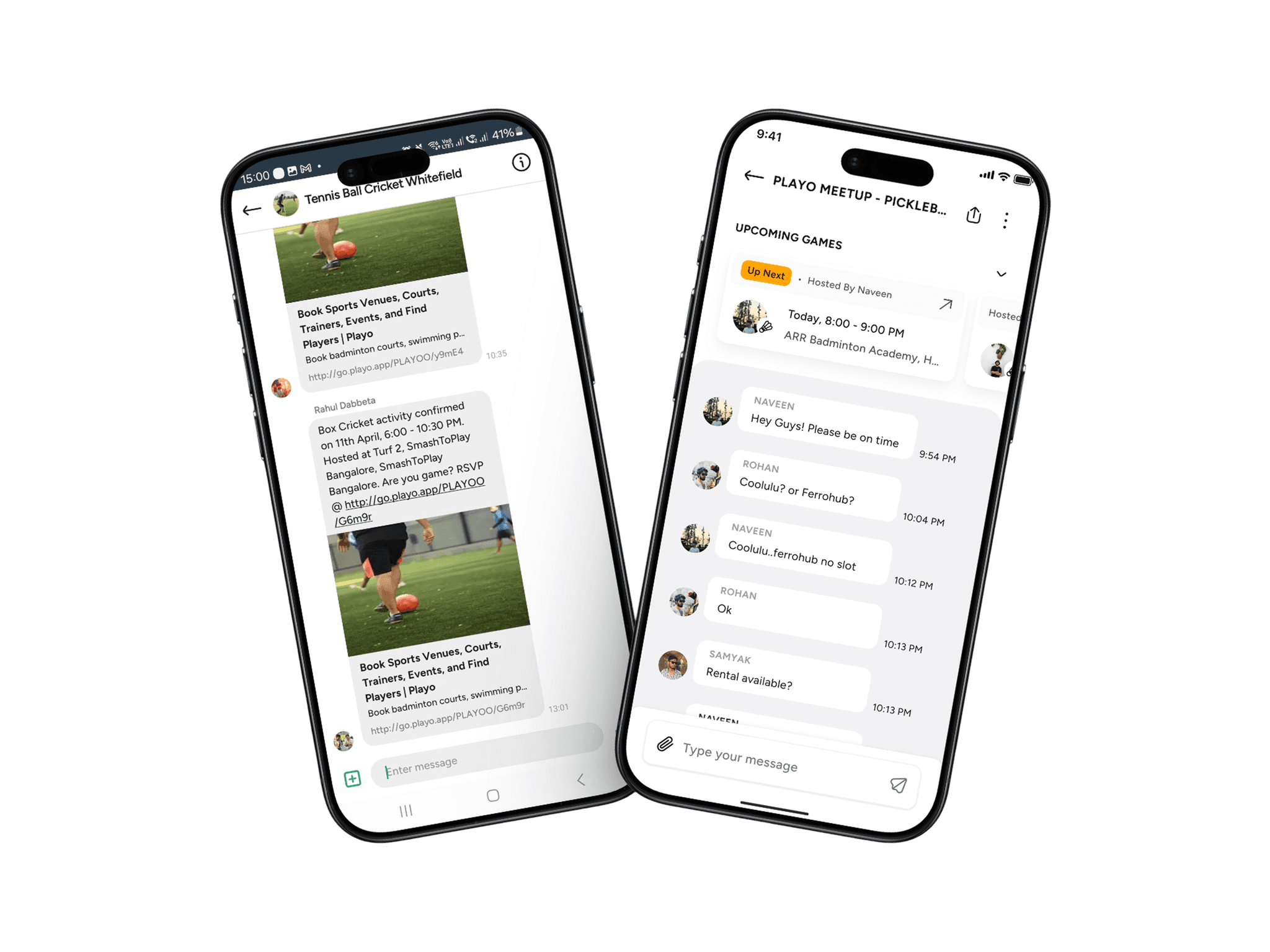
Replaced the chat-as-discovery model with a glanceable calendar of upcoming games tagged to the squad. Users see when games happen, where, and with how many players — all before joining. Progressive disclosure: pattern first, details on demand, one-tap to join.
Replaced the chat-as-discovery model with a glanceable calendar of upcoming games tagged to the squad. Users see when games happen, where, and with how many players — all before joining. Progressive disclosure: pattern first, details on demand, one-tap to join.
03
Intentional Imagery — Identity drives commitment
Intentional Imagery — Identity drives commitment
Made the squad cover image prominent in discovery and previews. Guided admins toward sport-relevant photos that signal the squad's character. Users judge a squad by its cover in milliseconds — we gave that judgment something real to evaluate.
Made the squad cover image prominent in discovery and previews. Guided admins toward sport-relevant photos that signal the squad's character. Users judge a squad by its cover in milliseconds — we gave that judgment something real to evaluate.
New Flow
Old Flow
New Flow
New Flow
Old Flow
New Flow
New Flow
Old Flow
New Flow
MEASUREMENT
What We Measured
What We Measured
We set the baseline metrics before launch so we could measure honestly, and tracked the redesign against the same metrics post-launch.
We set the baseline metrics before launch so we could measure honestly, and tracked the redesign against the same metrics post-launch.
Activities tagged to squads (monthly) — the primary signal that admins were investing in the squad as a real channel, not a backup
Activities tagged to squads (monthly) — the primary signal that admins were investing in the squad as a real channel, not a backup
Squad creation (monthly) — the signal that the feature itself was becoming desirable to start new ones
Squad creation (monthly) — the signal that the feature itself was becoming desirable to start new ones
Weekly squad joinees — the signal that members were actively engaging with squads rather than passively existing in them
Weekly squad joinees — the signal that members were actively engaging with squads rather than passively existing in them
Qualitative shift — observing whether admins and members started describing the feature differently after launch
Qualitative shift — observing whether admins and members started describing the feature differently after launch
BUSINESS IMPACT
The Impact
The Impact
Headline numbers tell one part of the story. The behavioral shift tells the rest.
Headline numbers tell one part of the story. The behavioral shift tells the rest.
Headline Wins
98 → 1,486
Activities tagged (+1,416%)
Activities tagged (+1,416%)
76 → 137
Squad creation (+80%)
Squad creation (+80%)
1,810 → 3,591
Weekly joinees (+98%)
Weekly joinees (+98%)
What changed in user behavior
The most meaningful shift wasn't in the metrics themselves — it was in how admins and members treated the feature.
The most meaningful shift wasn't in the metrics themselves — it was in how admins and members treated the feature.
Admins moved from using squads as a 'last hope' to using them as the primary channel — they began tagging games to squads first, not as a fallback when DMs failed.
Admins moved from using squads as a 'last hope' to using them as the primary channel — they began tagging games to squads first, not as a fallback when DMs failed.
Activity tagging grew 15× in 8 weeks, signalling that admins now saw the squad as worth investing in rather than worth ignoring.
Activity tagging grew 15× in 8 weeks, signalling that admins now saw the squad as worth investing in rather than worth ignoring.
Weekly joinee rate nearly doubled — the preview mechanism (calendar + imagery) helped members self-select into squads they actually wanted to be in.
Weekly joinee rate nearly doubled — the preview mechanism (calendar + imagery) helped members self-select into squads they actually wanted to be in.
Squad creation rose 80%, suggesting the rename and visual identity work reduced the perceived futility of starting a new squad.
Squad creation rose 80%, suggesting the rename and visual identity work reduced the perceived futility of starting a new squad.
"For the first time, people are actually talking in my group. Someone asked who's bringing shuttles. Someone else cracked a joke about last week's game. This feels alive." — Squad admin, post-launch.
"For the first time, people are actually talking in my group. Someone asked who's bringing shuttles. Someone else cracked a joke about last week's game. This feels alive." — Squad admin, post-launch.
That word — alive — was the validation we needed. The redesign hadn't just moved metrics. It had created the conditions for human connection.
That word — alive — was the validation we needed. The redesign hadn't just moved metrics. It had created the conditions for human connection.
WHAT'S NEXT
Future Iterations
Future Iterations
The squad redesign opened up a new design surface. Based on post-launch behavioral patterns and admin requests, four iterations are planned to deepen the community layer.
The squad redesign opened up a new design surface. Based on post-launch behavioral patterns and admin requests, four iterations are planned to deepen the community layer.
🏆 Squad Leaderboard
🏆 Squad Leaderboard
Recognizing the most active members within each squad — players who consistently join games, organize meetups, and contribute to squad life. Taps into social proof and intrinsic motivation, encouraging sustained participation without making it feel forced. Active members become visible to others, which strengthens identity and gives the squad a face.
Recognizing the most active members within each squad — players who consistently join games, organize meetups, and contribute to squad life. Taps into social proof and intrinsic motivation, encouraging sustained participation without making it feel forced. Active members become visible to others, which strengthens identity and gives the squad a face.
🛡️ Admin Permissions
🛡️ Admin Permissions
Giving admins control over who can create activities in their squad. Some squads want open posting where anyone can organize games. Others want curated experiences where only verified organizers can post. This flexibility lets communities self-govern based on their culture — open courts vs. trusted regulars.
Giving admins control over who can create activities in their squad. Some squads want open posting where anyone can organize games. Others want curated experiences where only verified organizers can post. This flexibility lets communities self-govern based on their culture — open courts vs. trusted regulars.
📸 Squad Media Gallery
A dedicated media section that automatically collects photos posted in the squad message wall. Members can browse memories from past games, tag themselves and others, and relive shared experiences. This is the move that transforms squads from transactional game-finding tools into living archives of community history.
A dedicated media section that automatically collects photos posted in the squad message wall. Members can browse memories from past games, tag themselves and others, and relive shared experiences. This is the move that transforms squads from transactional game-finding tools into living archives of community history.
🏷️ Photo Tagging
🏷️ Photo Tagging
Enabling members to tag each other in photos, creating a web of social connections within the squad. When you're tagged, you get notified. When you browse someone's profile, you see shared memories. This deepens the sense of belonging — the squad feels less like a utility and more like a real community.
Enabling members to tag each other in photos, creating a web of social connections within the squad. When you're tagged, you get notified. When you browse someone's profile, you see shared memories. This deepens the sense of belonging — the squad feels less like a utility and more like a real community.
Reflection
This project reframed how I think about design at scale.
This project reframed how I think about design at scale.
The Squads redesign added no new core functionality. Players could still create groups, invite others, and post games — exactly as before. What changed was the framing: the name, the structure, the visual identity. Three small moves, applied to existing capability, delivered a 15× lift in activity.
The Squads redesign added no new core functionality. Players could still create groups, invite others, and post games — exactly as before. What changed was the framing: the name, the structure, the visual identity. Three small moves, applied to existing capability, delivered a 15× lift in activity.
Sometimes the most valuable design work isn't building new features. It's restructuring the ones you already have so they match how users actually want to think about them
Sometimes the most valuable design work isn't building new features. It's restructuring the ones you already have so they match how users actually want to think about them
The deeper lesson was about jobs-to-be-done. Users didn't want to 'join a group.' They wanted to find their tribe. Once we saw the real job, the solution became obvious — and the metrics followed.
The deeper lesson was about jobs-to-be-done. Users didn't want to 'join a group.' They wanted to find their tribe. Once we saw the real job, the solution became obvious — and the metrics followed.
See Similar Projects
Your Brag Card : Because Your Wins Deserve Better Than a Plain Text Post
Your Brag Card : Because Your Wins Deserve Better Than a Plain Text Post
Reducing booking cancellations by 26% through a reimagined slot booking experience
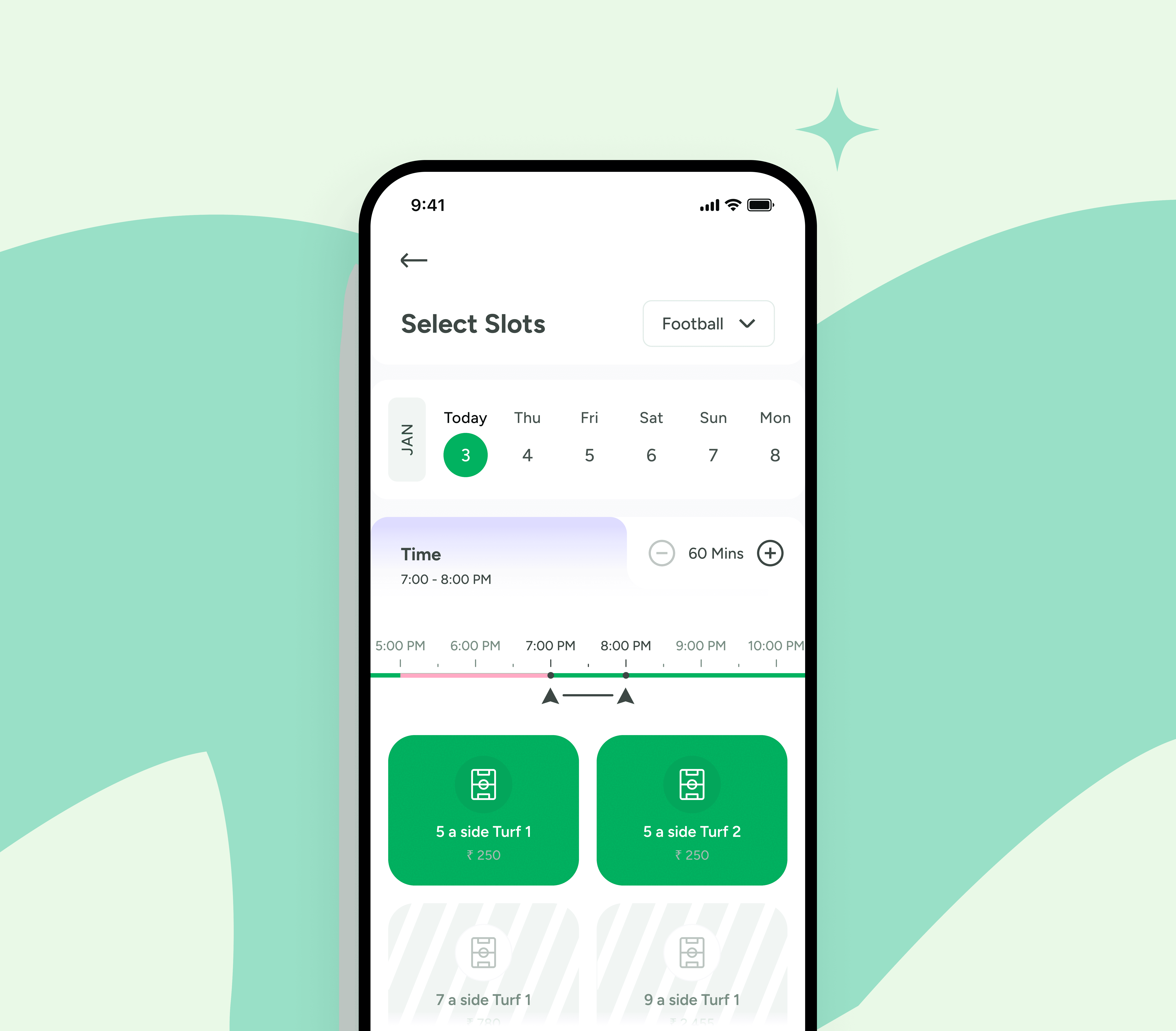
Reducing booking cancellations by 26% through a reimagined slot booking experience
View Case Study
View Case Study
Want to get in touch? I'd love to connect with you!
Want to get in touch? I'd love to connect with you!
Always up for collaborations, conversations, or maybe even a game
Always up for collaborations, conversations, or maybe even a game
jithinpankaj@gmail.com
Click to copy
Copied!
jithinpankaj@gmail.com
Click to copy
Copied!